
Once I had finalised my camera, the next decision was the lens.
I ended up buying the camera and the lens together, so choosing the right combination mattered.
Like most beginners, I turned to YouTube. I watched comparison videos, read reviews, and looked up everything around pairing lenses with the Sony a6700.
One thing was clear from the start.
I was on a budget.
Super telephoto lenses were completely out of the picture. Wildlife safaris themselves are expensive, and investing heavily in lenses at that stage didn’t make sense. So I thought differently. Until I could save up for safaris, what’s the closest thing to wildlife photography that I could realistically do?
The answer was birding.
That meant I needed a telephoto lens that was affordable and good enough to start learning in the field.
After researching, two lenses stood out:
- Sony 70–350mm
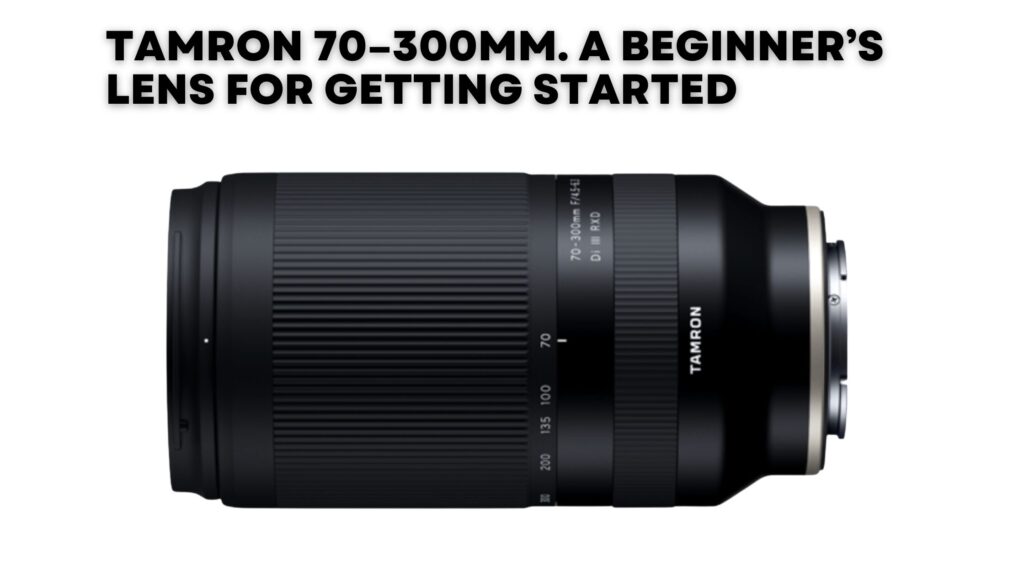
- Tamron 70–300mm
Both lenses were quite similar in terms of image quality and performance. The Sony offered an extra 50mm of reach but came at a higher price. After comparing both and keeping budget in mind, I decided to go with the Tamron 70–300mm.
Tamron 70–300mm – Key Specifications
- Focal length: 70–300mm
- Maximum aperture: f/4.5–6.3
- Weight: Approx. 545g
- Filter size: 67mm
- Autofocus: RXD motor
- Mount: Sony E-mount
- Weather resistance: Basic moisture resistance
My On-Field Experience with the Tamron 70–300mm
This lens has been with me on my early bird walks, wetlands, plateaus, and open trails, and using it consistently in the field has given me a clear idea of where it works well and where it starts to feel limiting.
In terms of build quality, the lens feels reassuring for its price. It doesn’t feel fragile or cheaply made, and it balances well on the camera during long walks. I’ve carried it for hours without feeling weighed down, which matters a lot when birding involves a lot of walking and waiting. The lighter weight also makes it easier to react quickly when a bird suddenly appears.
When it comes to image quality, the lens performs really well in decent light. Colours look natural, details are fairly sharp, and for larger birds or birds that are reasonably close, the results can be very satisfying. It has given me several images that I’m genuinely happy with, especially during early morning outings with good light.
Where the lens starts to show its limitations is when bird photography becomes the main focus. At 300mm, the reach often feels short. Birds are small, alert, and rarely close enough, which means cropping becomes a regular part of the workflow. While cropping works to an extent, it does make you constantly wish for more focal length.
Autofocus performance is decent, but not flawless. For perched birds or slower movement, it does its job well. However, with fast-moving birds, birds in flight, or birds partially hidden in foliage, autofocus can struggle. It’s not unusable, but it does require patience and multiple attempts.
Another area where you feel the limitation is low-light performance. At 300mm, the aperture drops to f/6.3, which means early mornings, foggy conditions, or shaded areas push the ISO higher than ideal. This isn’t surprising at this price point, but it’s something bird photographers will notice quickly.
Overall, the Tamron 70–300mm feels like a lens that’s meant to help you learn and grow. It works well for general wildlife style photography and early birding, but once you start getting serious about birds, you naturally begin to outgrow it.
And honestly, that’s not a bad thing.
Final Thoughts
Would I recommend this lens?
Yes.
If you’re on a budget and want to start birding or wildlife style photography without spending a fortune, the Tamron 70–300mm is a solid choice. I’m happy with my purchase, and it has helped me understand what kind of photography I want to pursue.
At the same time, it has also made one thing very clear. If birding becomes your main focus, you will eventually want more reach.
My next upgrade will be the Sony 200–600mm. Until then, this lens continues to do what it was bought for helping me learn in the field.
You can also follow me on Instagram, where I share more bird photographs and moments from the field.