
Birding is usually my happy place. It is about silence, patience, waiting, watching, and sometimes getting that one photograph that makes the entire morning worth it.
But some days in the field do not leave you happy.
Some days leave you disturbed.
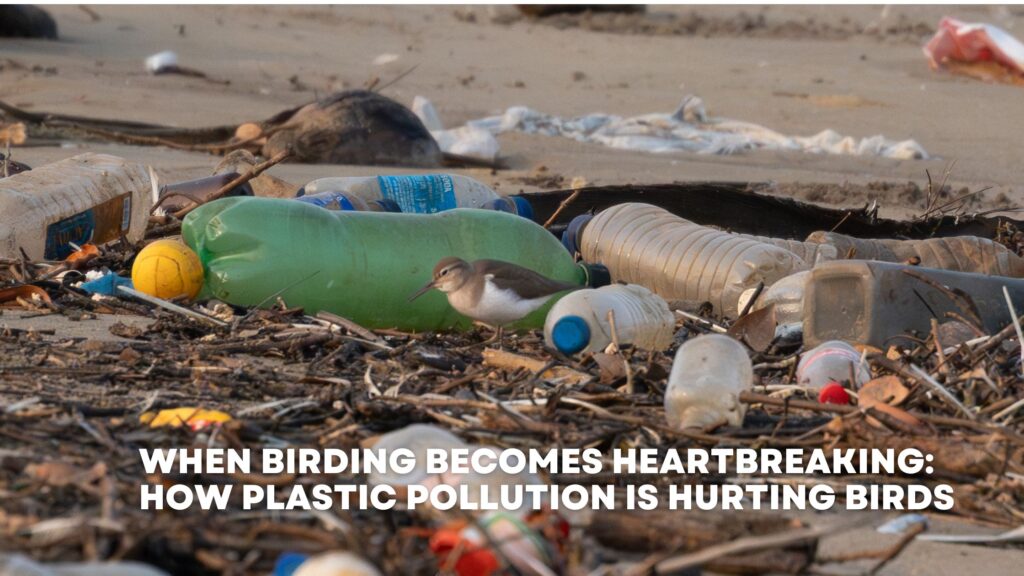
On one of my recent birding visits to a mudflat, I went expecting birds, reflections, movement, and maybe a few good shots. What I did not expect was the amount of trash lying everywhere. Beer bottles, plastic bottles, wrappers, broken pieces of plastic, discarded waste, and even half-cut fishing nets were scattered across the mudflats.
For birds, this is not just garbage.
This is their feeding ground.
Mudflats and wetlands are important habitats where many birds feed, rest, and survive, especially waders and migratory birds. When these spaces are filled with plastic, the birds do not just lose clean habitat, they also face the risk of eating plastic, getting trapped in nets, or being injured by sharp waste.
Globally, plastic pollution is one of the biggest threats to birds. UNEP says more than 11 million metric tonnes of plastic enter the oceans every year, and plastic harms marine life through ingestion, entanglement, and food-chain disruption.
The numbers are terrifying. A major study published in PNAS found that plastic ingestion in seabirds is rising rapidly and predicted that 99% of seabird species may ingest plastic by 2050 if the trend continues. Another estimate says around 1 million seabirds die every year because of plastic pollution.
Plastic does not always kill instantly. Sometimes birds mistake small plastic pieces for food. Sometimes plastic fills their stomach and makes them feel full even when they are starving. Sometimes it causes internal injury. Sometimes it carries toxins. And sometimes, fishing lines and abandoned nets trap birds so badly that they cannot fly, feed, or escape.
Discarded fishing gear is another huge problem. FAO and UNEP estimate that around 640,000 tonnes of fishing gear are lost or abandoned in the ocean every year, and this “ghost gear” continues to trap marine life long after it is thrown away. UNEP has also reported that 265 bird species have been recorded entangled in plastic litter, including seabirds, freshwater birds, and land birds.
That day, I saw a bird lying on the mudflat, a tern, struggling and almost on its last breath. I cannot say for sure whether plastic caused it, because I did not examine the bird. It could have been illness, injury, exhaustion, or something natural. But seeing it lying there, surrounded by plastic and waste, was heartbreaking.
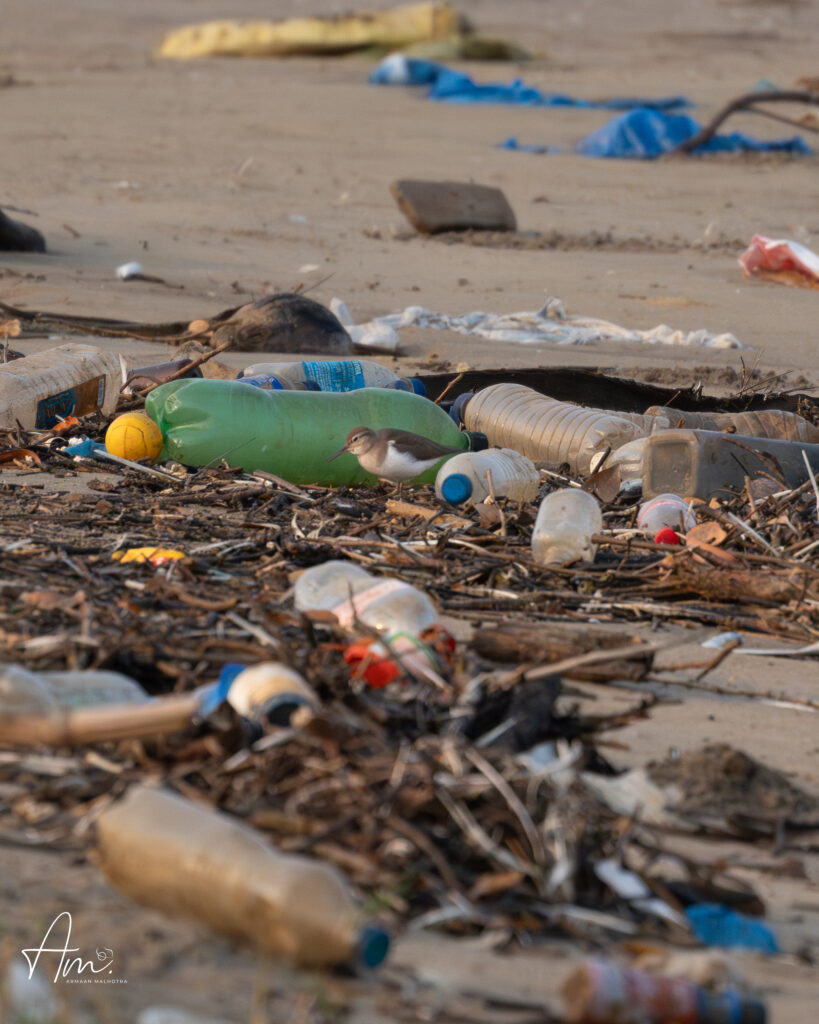
Then I saw another bird, a common sandpiper or redshank, moving through the garbage, surrounded by bottles and plastic bits. At one point, it looked like it was picking at tiny pieces of plastic, possibly mistaking them for food.
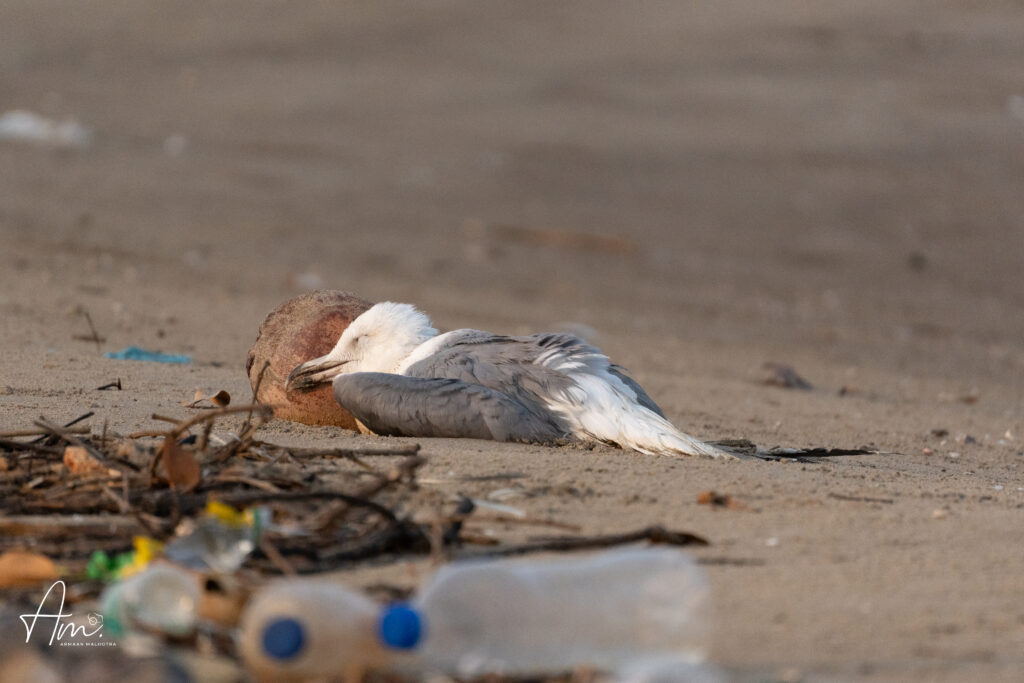
That image stayed with me.
Because this is what pollution really looks like. It is not just a dirty beach or an ugly photograph. It is a living bird trying to survive in a place we have ruined.
India’s bird populations are already under pressure. The State of India’s Birds 2023 summary says 60% of assessed species show long-term decline, and 40% are currently declining. Habitat loss, pollution, climate change, and human disturbance all add up. For wetland birds, dirty water and garbage make survival even harder.
As birders and photographers, we go into these spaces because we love birds. But maybe our responsibility cannot stop at clicking them. If we see plastic, we need to talk about it. If we see fishing nets lying around, we need to report or remove them safely where possible. If we visit wetlands, beaches, and mudflats, we need to leave them cleaner, not worse.
A clean wetland is not just beautiful.
It is life support.
That morning changed something for me. I went there to photograph birds, but I came back thinking about how fragile their world really is.
Birds do not ask for much.
A clean place to feed.
A safe place to rest.
A chance to survive.
The least we can do is stop turning their homes into dumping grounds.
If this post makes even one person think twice before throwing plastic near a beach, wetland, river, or mudflat, then maybe these photographs have done more than just document a sad moment.
Maybe they can help start a small change.