
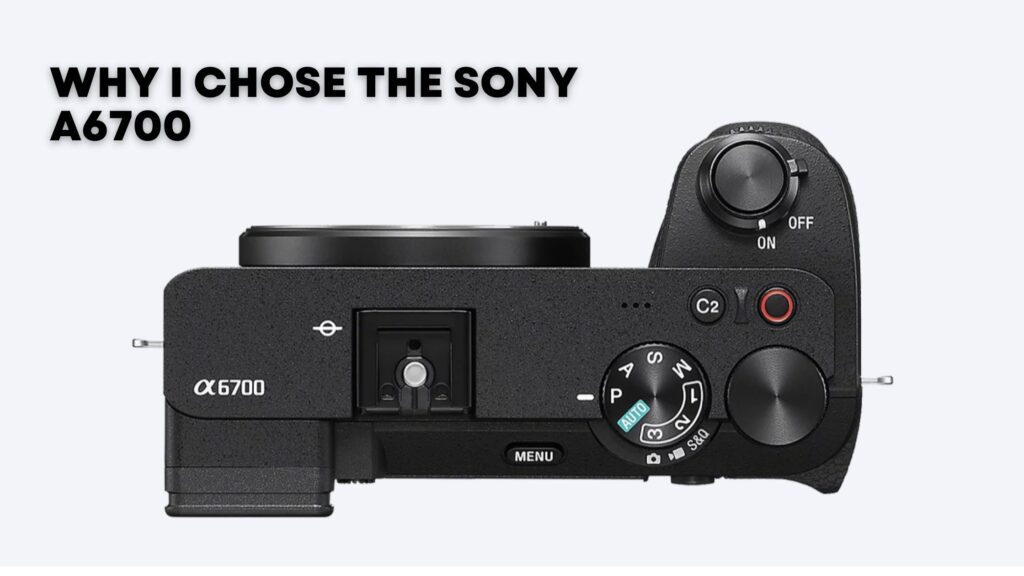
Buying a camera felt way harder than it should have been.
I went through the usual confusion between Sony A6400 as a good beginner camera or stretch the budget? APS-C or full frame? Save money now or buy something I won’t outgrow? I watched reviews, read forums, compared specs endlessly, and still wasn’t fully convinced.
At the time, I wasn’t into birding the way I am now. I wasn’t buying a camera specifically for birds or wildlife alone. My requirements were broader wildlife, street photography, and occasional weddings and events. I knew I needed something fast, reliable, and versatile, but I didn’t fully understand how much autofocus performance, especially subject and eye tracking, would eventually matter to me.
That context shaped my decision more than any single spec.
After all that, I landed on the Sony A6700 and after using it consistently for the last four months, I can say this confidently: I’m very happy with the decision.
Why I didn’t go with the A6400
The A6400 is a great camera, no doubt. It’s affordable and capable. But I didn’t want to buy something and start feeling limited within a year, especially as my photography interests continued to evolve.
The A6700 felt like Sony saying, “Here’s a serious APS-C camera that can grow with you.”
Why the A6700 made sense for me
The biggest reason was value for money. It’s not cheap, but for what it offers, it’s extremely well-priced. I wanted a camera that could handle a wide range of scenarios fast wildlife moments, candid street shots, and real-world event conditions without forcing me into expensive full-frame lenses.
The 26 MP APS-C sensor is honestly the sweet spot. It gives enough resolution to crop when needed, while still keeping file sizes manageable in Lightroom.
The APS-C sensor size also offers a reach advantage, something I didn’t fully appreciate at the time but now value deeply for wildlife and bird photography.
Sony A6700 – Key Specs (The Fun Part)
This is where the A6700 really shines.
📷 Sensor & Image Quality
- 26 MP APS-C BSI CMOS sensor
- Excellent dynamic range
- Very usable high ISO for an APS-C body
⚡ Autofocus & Speed
- AI-based Real-time Tracking
- Dedicated Bird Eye AF (something I didn’t even realise I’d end up relying on)
- 759 phase-detection AF points
- Up to 11 fps continuous shooting
🎥 Video Capabilities
- 4K up to 120 fps
- Oversampled 4K for sharper footage
- S-Log3, S-Cinetone support
- 10-bit 4:2:2 internal recording
- No serious overheating issues for normal use
🖐 Stabilization & Handling
- 5-axis In-Body Image Stabilization (IBIS)
- Comfortable grip, even with larger lenses
- Weather sealed body
- Good battery life for field use
🧠 Modern Features
- Fully articulating screen
- USB-C charging
- Fast, logical menu system
- Excellent customization options
For a camera in this size and price range, this feature set is honestly impressive.
Using it in the real world
As I spent more time outdoors and gradually got deeper into birding, I started to understand just how important autofocus behaviour really is. That’s where the A6700 began to shine in ways I hadn’t originally planned for.
Whether it’s tracking a bird in flight against a busy background, locking onto an eye at long focal lengths, or switching quickly between very different shooting scenarios, the autofocus has been consistently dependable.
My keeper rate improved noticeably, tracking became more intuitive, and the camera never felt like it was holding me back.
Any missed shots now are due to my timing, technique, or fieldcraft — not the camera.
A realistic limitation
Like any APS-C body, high ISO performance does have its limits. In very low light, noise becomes noticeable sooner than it would on a full-frame camera. That said, within realistic shooting conditions and with sensible exposure, the files remain more than usable and easy to work with.
For the kind of mixed photography I do, this trade-off has been completely acceptable.
Final thoughts
The Sony A6700 isn’t about chasing full-frame hype or specs for the sake of it. It’s about choosing a camera that works exceptionally well across different styles of photography, stays within a realistic budget, and has room to grow with you.
For me, it has turned out to be the perfect balance of performance, flexibility, and practicality.
This is just Part 1 of my gear journey.
In the next part, I’ll talk about my lens because that’s where photography really starts to feel personal.
If you’re currently choosing a camera and aren’t entirely sure where your photography will take you yet, I’d love to know what you’re considering and why.
Stay tuned.
If this journey resonates with you, you can follow my work and progress on Instagram, where I share the photographs behind these stories.
Pingback: Tamron 70–300mm. A Beginner’s Lens for Getting Started - armaankefunde.org
Pingback: A Return to Socorro Plateau for Birding - armaankefunde.org